
Coffee Plantations in Africa: Discover the Chagga Connection in Tanzania
Travel isn’t just about what you see, it’s about what you support.
Coffee plantations in Africa are as diverse and storied as the landscapes they grow from .In the highlands of Tanzania, under the shadow of Mount Kilimanjaro, lies a coffee story unlike any other. For conscious travelers and coffee lovers alike, understanding where your brew comes from is the first step toward traveling with purpose.
And if you're looking to explore these stories in real life, Mang’ola Life, a sustainable safari tour company in Tanzania, offers a unique way to experience coffee, conservation, and connection all in one journey.
Let’s take a closer look at the roots of African coffee,and why Tanzania’s coffee belt deserves a place on your itinerary.
Africa’s legacy in the global coffee trade
Why African coffee stands out
From Nairobi cafés to Nordic roasteries, African coffee has long enchanted the palates of professionals and everyday drinkers alike. But what makes it truly stand out?
- Heirloom varietals: Many African beans descend from wild, centuries-old lineages that offer a depth of flavor rarely found in commercial hybrids.
- Volcanic soil: Across East Africa’s highlands, nutrient-dense volcanic soils enrich coffee plants with essential minerals, fostering vibrant flavor complexity.
- Bright flavor profiles: African coffees are known for their high acidity, floral aromatics, and tasting notes that range from citrus to berry to jasmine—often described as "wine-like."
- Hand-harvested beans: The majority of Africa’s coffee is handpicked on smallholder farms, ensuring only the ripest cherries are selected for processing.
This attention to quality, tradition, and ecology has positioned African coffee as both a premium product and a symbol of origin-driven excellence in the global marketplace.
Where coffee thrives across Africa
Coffee cultivation in Africa is deeply tied to place. Each region brings a unique terroir, and a unique story:
- Ethiopia: The birthplace of Arabica. With ancient forests and wild-growing heirlooms, Ethiopian coffee is considered the soul of specialty coffee culture.
- Kenya: Known for its meticulous double-wash processing, which yields sparkling acidity and syrupy body. Kenyan coffee often delivers complex profiles of blackcurrant, tomato, and florals.
- Rwanda & Uganda: Rising specialty origins, where high-altitude farms are producing elegant, structured coffees despite historical instability.
- Tanzania: From Kilimanjaro’s volcanic foothills to the southern highlands of Mbeya, Tanzania produces some of the most balanced and underrated beans in the world.
And in each of these countries, coffee is not just a crop, it’s a livelihood.
Smallholder power and ethical sourcing
In Africa, over 80% of all coffee is grown by small-scale farmers. These producers, often working just 1–2 hectares of land, are the true heart of the industry. Many belong to cooperatives that champion:
- Fair trade and traceability
- Local processing and value retention
- Transparent, community-led supply chains
But more than just certifications, these structures offer real agency. As shown in TechnoServe’s work across the Democratic Republic of Congo, sustainable coffee programs can increase income, protect landscapes, and create long-term resilience in post-conflict regions.
Meanwhile, models of agroforestry, where farmers integrate trees, food crops, and coffee together, are showing exceptional results. In Kenya, for instance, the GrowGrounds Agroforestry Initiative demonstrates how sustainable coffee cultivation can restore soil, boost biodiversity, and create a carbon-positive supply chain, all while strengthening smallholder livelihoods.
In short: ethical coffee isn’t a trend, it’s the future. And Africa is leading the way.
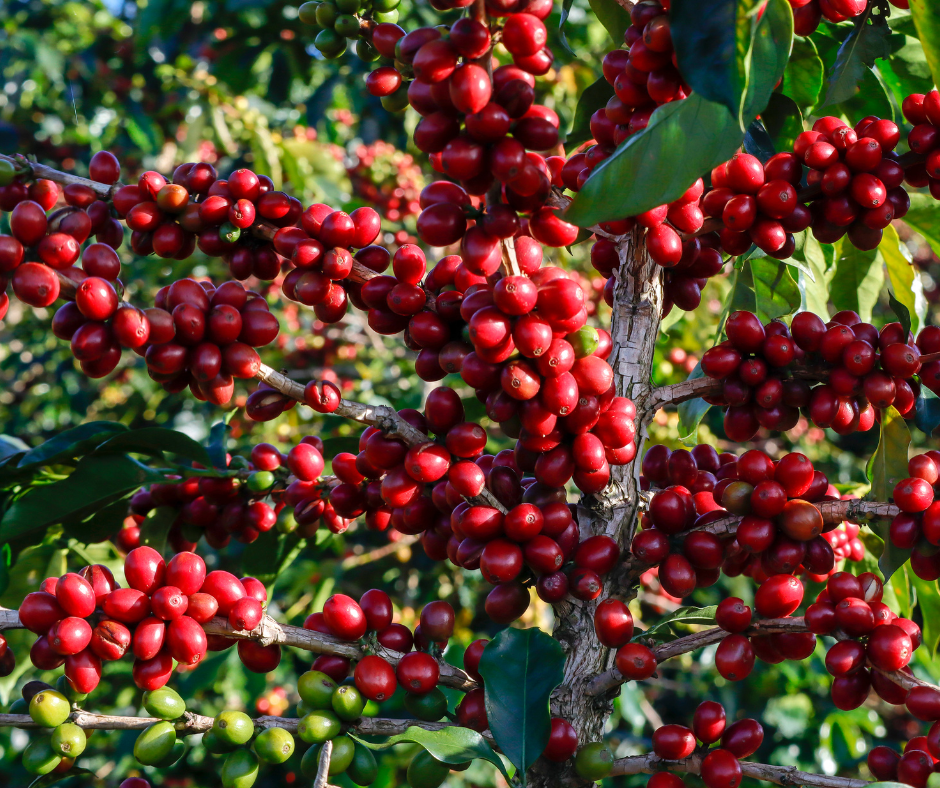
From bean to brew: Tanzania's coffee belt
Kilimanjaro’s volcanic slopes
In northern Tanzania, the slopes of Mount Kilimanjaro create a microclimate that’s become legendary in the coffee world.
At elevations between 1,200 and 1,800 meters, Arabica coffee grows slowly, allowing sugars to develop and flavors to intensify. The volcanic soil here is rich in potassium and organic matter, while the cool, misty air keeps the beans hydrated and disease-resistant.
The result? Elegant, complex coffees with:
- Balanced acidity
- A silky, medium body
- Notes of citrus zest, cocoa, and delicate florals
But Kilimanjaro isn’t just about quality. It’s also about tradition, many farms are intergenerational and rely on agroecological principles to nurture the land.
The rise of the Peaberry
Tanzania is also home to a rare coffee gem: the Peaberry.
Peaberries form when only one seed develops inside the coffee cherry instead of the usual two. This mutation results in:
- A smaller, rounder, denser bean
- More even roasting
- A cup that’s brighter, sweeter, and more concentrated in flavor; Because they must be hand-sorted post-harvest, Peaberries are often sold as specialty lots. Their rarity makes them a favorite among third-wave roasters, and their higher price point means better earnings for farmers, particularly those organized in fair trade cooperatives.
For travelers visiting Tanzania, tasting a freshly roasted Peaberry near the very farm it was grown on isn’t just a bucket-list coffee moment, it’s an invitation to connect with place, people, and purpose.
The Chagga people: Kilimanjaro’s original coffee stewards
Who are the Chagga?
Nestled on the fertile southern and eastern slopes of Mount Kilimanjaro, the Chagga people are one of Tanzania’s most agriculturally skilled and ecologically conscious communities. Indigenous to the region, the Chagga have lived in close relationship with the land for centuries, mastering the delicate balance between cultivation and conservation.
Their traditional knowledge isn’t just agricultural, it’s ecological. Passed down through generations, their land-based wisdom reflects a deep understanding of rainfall cycles, soil health, and forest management. In a world facing climate uncertainty, the Chagga’s practices feel less like folklore, and more like foresight.
Generations of coffee farming
Although coffee was introduced to the region during the colonial era, the Chagga did not treat it as an imposed crop. Instead, they incorporated it into their existing systems of cultivation, reinterpreting it through their own agricultural knowledge. Over time, coffee ceased to be merely an economic resource and became embedded in the rhythms of kinship, inheritance, and family tradition.
Walk through a Chagga farm today and you’ll likely find a model of agroforestry in action: coffee trees thriving beneath the shade of banana plants, with vegetables, medicinal herbs, and even livestock integrated into the same small plot. This polyculture not only supports biodiversity, creates year-round resilience, protecting the land from erosion and drought while generating multiple streams of food and income.
Coffee isn’t grown in isolation here. It lives in harmony, with other plants, with water sources, and with the people who nurture it.
Coffee as a cultural legacy
For the Chagga, coffee goes far beyond the cup. It touches nearly every aspect of life, from storytelling and song to ceremonies and seasons. A good harvest is celebrated with village gatherings. Coffee brewing is passed down as an intimate ritual. And for many, the scent of roasting beans is as familiar as that of rain-soaked soil after a storm.
Children learn to recognize coffee ripeness the same way they learn to walk. Elders speak of how coffee once paid for school fees and built homes. It’s a crop, but it’s also memory, pride, and possibility.
The cooperative movement: KNCU
In 1930, in response to exploitative colonial trade practices, Chagga farmers organized one of the earliest and most successful cooperative models in East Africa: the Kilimanjaro Native Cooperative Union (KNCU).
Still active today, KNCU:
- Supports more than 150,000 smallholder farmers in the region.
- Champions fair trade principles.
- Facilitates access to global markets while ensuring transparent pricing and reinvestment in local infrastructure.
It’s a model built on community ownership and equity, not extraction. And it’s proof that local knowledge, when properly resourced, can scale ethically.
For travelers interested in regenerative tourism and ethical sourcing, visiting a KNCU-affiliated farm offers something rare: not just a tour, but a lesson in how a crop can unite a people, a landscape, and a legacy.

Facing forward: The future of Chagga coffee
Adapting to a changing climate
Kilimanjaro is experiencing rising temperatures and unpredictable rainfall. The Chagga are meeting this head-on with:
- Shade-grown practices using banana trees.
- Crop diversification for resilience.
- Community knowledge hubs for regenerative techniques.
Conservation at the heart of coffee
Coffee cultivation here isn’t just sustainable,it’s restorative:
- Protecting watersheds and aquifers around Kilimanjaro.
- Preventing soil erosion with agroforestry design.
- Creating synergy with eco-tourism and cultural tourism.
How to experience Chagga coffee culture in Tanzania
Hands-on farm tours
Looking to learn where your coffee comes from?
In Tanzania, visitors can:
- Pick, wash, roast, and brew beans alongside farmers
- Discover traditional brewing tools
- Try banana beer and home-cooked Chagga meals
Stay with Chagga hosts
Spend a night or more in:
- Eco-lodges run by Chagga families
- Homestays in highland villages
- Enjoy storytelling, cooking, and daily farming life
These immersive experiences help bridge cultures,and fund conservation.
Support ethical coffee
Before you go, or once you return:
- Buy beans directly from KNCU or local vendors.
- Choose brands that disclose sourcing and grower partnerships
- Ask coffee shops if their Tanzanian beans come from Chagga cooperatives.
Conscious travel starts with your cup
If you love coffee and crave travel that makes a difference, Tanzania's coffee belt is calling.
At Mang'ola Life, we help travelers connect with culture, community, and conservation,one cup at a time. From immersive farm visits to regenerative safaris, your journey becomes part of something bigger.
Explore our
conscious safaris at
Mang’ola Life Tanzania safari tours

Welcome to Mang'ola life we are a sustainable safari company located in the heart of Tanzania, Africa. Plan your next adventure with us.