Your guide to the African animal migration: timelines, maps, and meaningful safaris
Learning to travel at the pace of nature.
What if your next adventure didn’t revolve around checklists, but around rhythms,of rain, of hooves, of instinct?
Every year, millions of animals cross the open plains of East Africa: african animal migration. Guided by nothing but survival. No GPS. No tour bus. Just the pulse of the Earth beneath their feet.
In this blog, we’ll take you deep into the heart of the Great Migration,not just as a spectacle to witness, but as a living story of connection, movement, and ecological balance.
And if we haven’t met yet. Mang'ola Life, a conscious safari company rooted in northern Tanzania. We co-create regenerative journeys that honor local communities, wildlife, and wild places, no rush, no crowds, just presence.
What is the African migration?
A natural cycle of movement and survival
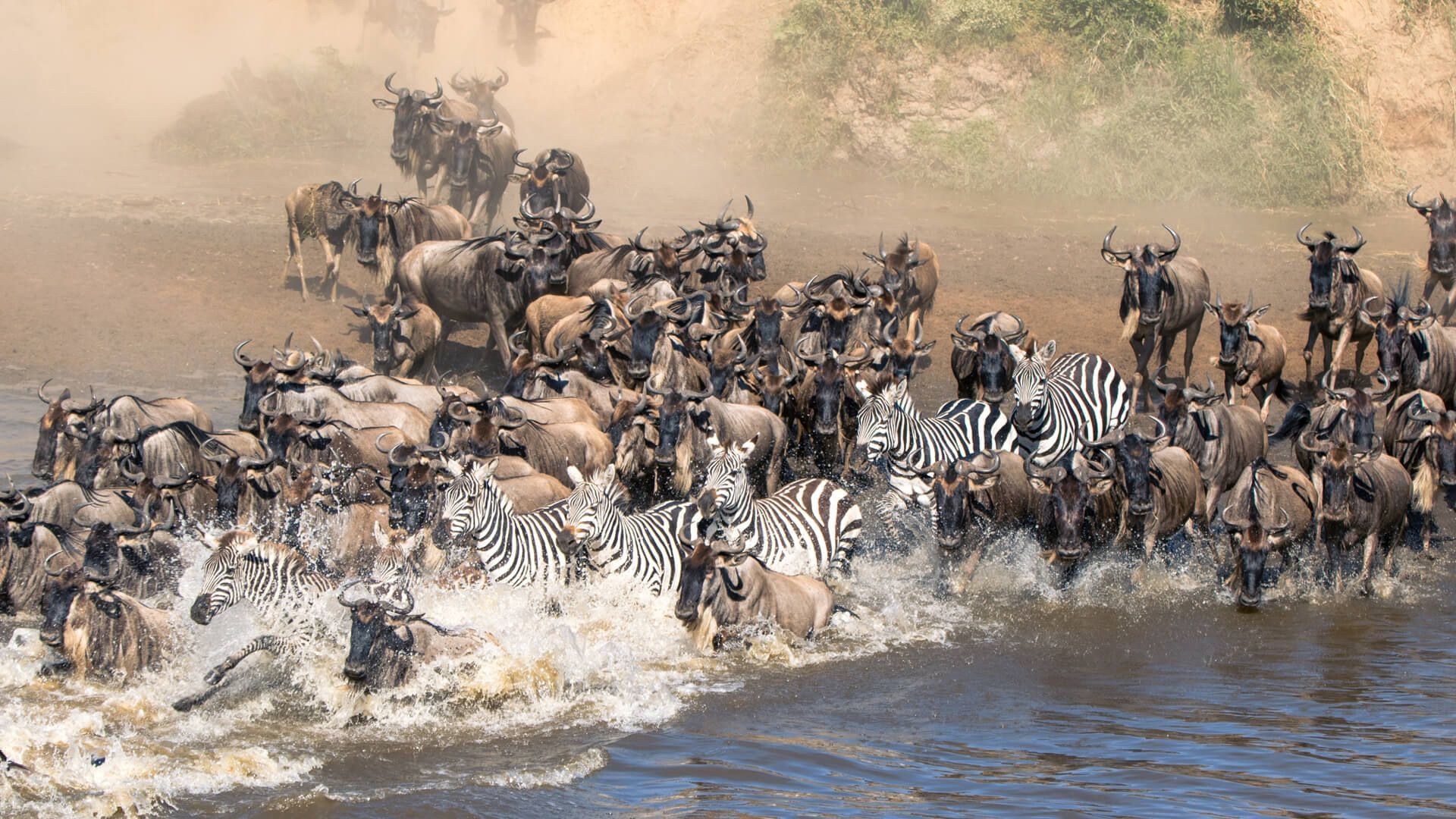
Every year, over 2 million wildebeest, zebras, and antelope embark on a circular journey spanning nearly 1,800 miles across Tanzania’s Serengeti and Kenya’s Masai Mara. Their mission? Follow the rains. Find green grass. Survive.
This migration is not random, it's deeply seasonal and strategic and we will dive deeper into this along the article.
- January–March: Calving season in southern Serengeti
- April–June: Herds head northwest as water sources shift
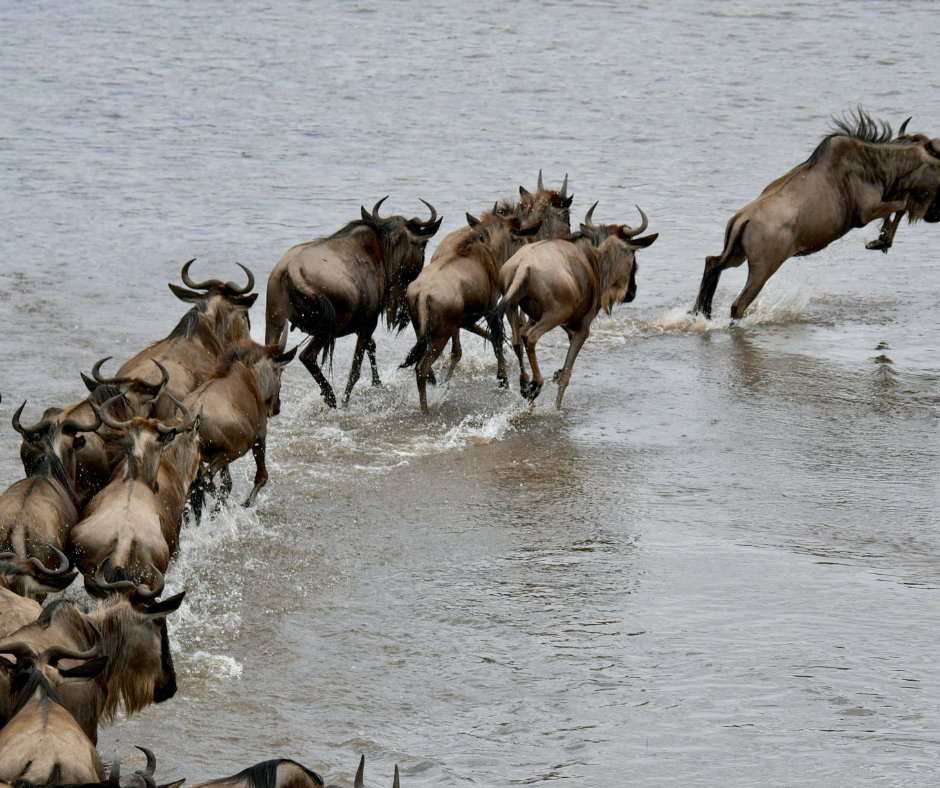
- July–September: The dramatic Mara River crossing, crocodiles, chaos, and survival
- October–December: Return south to start the cycle again
Each stage supports the ecosystem: predators follow prey, grasslands are naturally trimmed, and soil fertility improves.This isn’t just movement. It’s maintenance.
The Serengeti itself is a UNESCO World Heritage Site a testament to the region's ecological importance and a global call to protect it for generations to come.
Why it’s known as the Great Migration
This isn’t a weekend event. It’s a continuous, year-round phenomenon often referred to as the greatest wildlife show on Earth.
Why?
- Scale: Millions of animals on the move
- Diversity: Wildebeest, zebra, gazelle, eland, and more
- Drama: River crossings, predator-prey standoffs, births, and losses
- Balance: Nature operating in stunning harmony
But beyond the spectacle, the migration is a lesson. A lesson in timing. In interdependence. In the fragile balance that keeps entire ecosystems alive.
And as we look toward the future, African migration trends,both animal and human, remind us just how urgent it is to protect these natural rhythms in a rapidly changing world. If you're curious about what these trends look like today and why they matter, take a look at this2025 migration trends spotlight from the Africa Center.
Why do animals migrate in Africa?
Following rain and regrowth
The African migration isn’t driven by instinct alone, it’s driven by rain. Wildebeest, zebras, and gazelles follow the scent of fresh rainfall because it signals new grasslands and water sources. After months of dry heat, the first showers bring regeneration: soft grasses for grazing, full rivers for hydration, and cooler temperatures for movement.
- Rain = grass
- Grass = survival
- No rain = no migration
This cycle is why the animals move in a loop year after year, with such astonishing precision that it almost feels choreographed by nature itself.
A system of ecological balance
The migration isn’t just epic, it’s essential. Without it, the balance between predator and prey would collapse, and grasslands would be overgrazed or left barren. As these massive herds move, they:
- Fertilize the soil with droppings.
- Trim overgrowth with grazing.
- Attract predators (lions, hyenas, crocs), which keeps populations in check.
- Redistribute nutrients across the ecosystem.
This is nature’s version of a sustainable delivery system, one that keeps the Serengeti and Masai Mara alive.
When does the migration take place?
It’s a continuous, year-round journey
Forget the idea of a one-time spectacle.The Great Migration is a full-circle event that never truly “starts” or “ends.” It loops through Tanzania and Kenya, constantly in motion, with animals reacting to seasonal shifts and rainfalls. Your experience of it will depend on when and where you go.
So don’t just ask: “When’s the migration?” Ask: “What part of the journey do I want to witness?”
Key migration phases by season
Here’s a quick breakdown of how the year unfolds:
- January – March: Calving Season (Southern Serengeti)
Around 500,000 wildebeest calves are born within weeks. It’s dramatic, beautiful,and a predator’s paradise. - April – June: Journey North (Central to Western Serengeti) As grasses dry up, herds move in massive lines across long distances. This is when the movement intensifies.
- July–August: River Crossings (Grumeti & Mara Rivers)
The iconic, heart-racing moment. Thousands cross crocodile-infested waters in one of nature’s most cinematic scenes. - October–December: Return South
After rains arrive in the south, the herds loop back toward the Ngorongoro region to begin again.
Travel tip: There’s no “bad” time to witness the migration,just different chapters of the same powerful story.
Which animals are involved in the migration?
Wildebeest are the main movers
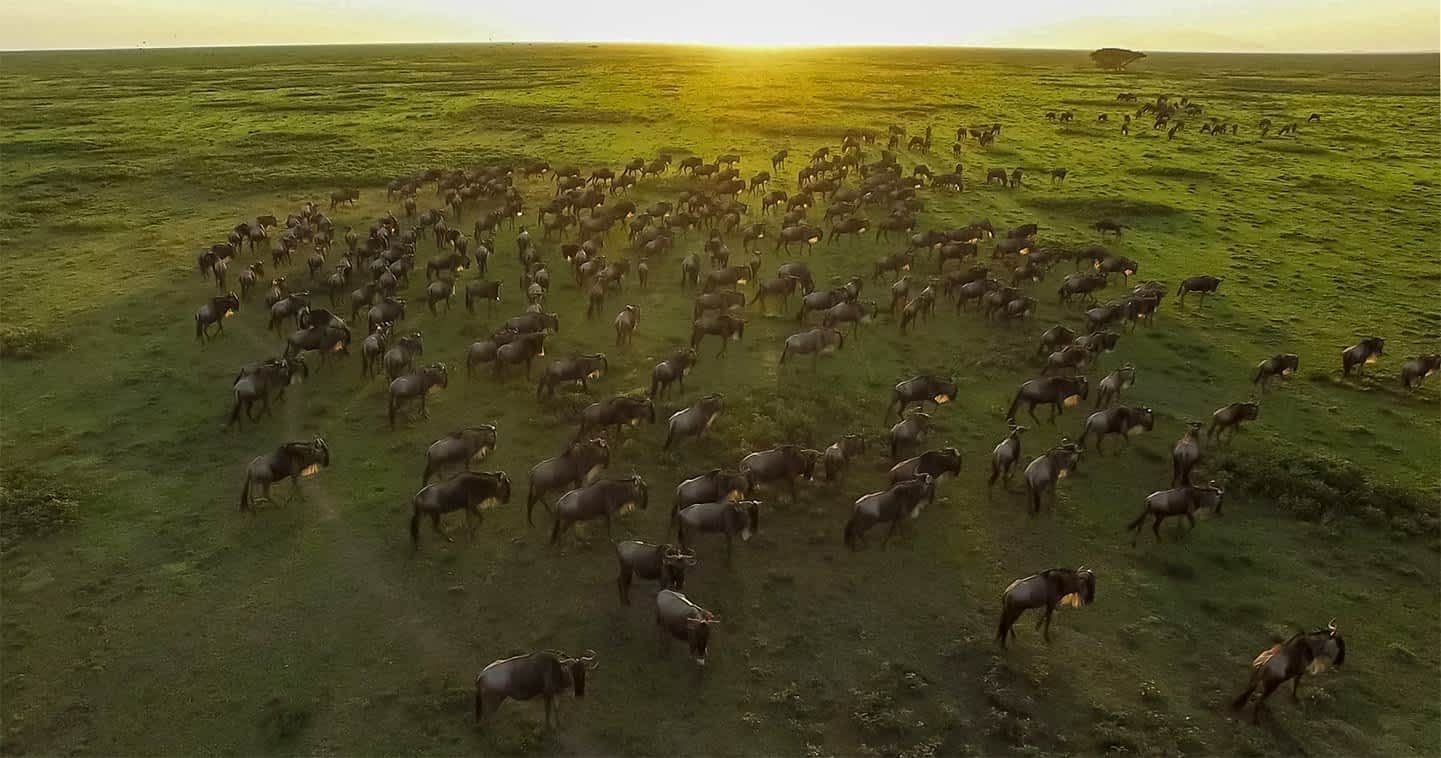
Picture a sea of movement, hooves pounding the earth, dust rising into the golden air, thousands upon thousands of wildebeest charging forward like a heartbeat of the land itself. These are the stars of the migration.
Over 1.5 million wildebeest set the pace of this journey, shaping the rhythm of the entire ecosystem. As they move, they graze intensively, reshaping grasslands, regenerating soils, and creating pathways for other animals to follow.
They aren’t just travelers. They’re ecological architects.
It’s a multi-species movement
The wildebeest may lead, but they don’t travel alone.
- Zebras often walk ahead of the herds, grazing on tougher grasses and clearing the way.
- Thomson’s and Grant’s gazelles follow behind, nibbling on the tender new shoots left behind.
- Elands, the largest antelopes in Africa, drift alongside in smaller numbers.
- And then come the watchers in the shadows: lions, leopards, cheetahs, and hyenas, the predators whose survival also depends on this constant cycle.
Each species plays a part. This isn’t just a migration. It’s a choreographed survival dance, where each step balances nature’s needs with remarkable precision.
Where does the migration happen?
The route: Serengeti to Masai Mara and back
The journey begins in Tanzania’s Serengeti National Park.
From there, the herds move north toward Kenya’s Masai Mara, crossing treacherous rivers and returning south in a continuous loop.
This isn’t a straight path,it’s a vast circular movement covering thousands of kilometers each year, constantly responding to rainfall, grass regrowth, and ecological signals.
Where is the best place to see the Great Migration?
Serengeti vs. Masai Mara: which side is better?
It’s a question every traveler asks, and the answer is, it depends on what you’re seeking.
Suppose you're dreaming of river crossings, where wildebeest plunge into crocodile-infested waters in a frenzy of survival. In that case, the Masai Mara in Kenya during July and August might be your moment. These scenes are raw, cinematic, and unforgettable.
But if what you want is to witness the entire story unfold, from calving to crossings to return, the Serengeti is where the journey truly lives. With a broader landscape and longer migration timeline, Tanzania offers a deeper dive into the migration’s rhythms.
Both regions hold magic. One is not better, just different chapters of the same epic.
Why Tanzania holds the heart of the migration
Here’s a lesser-known truth: nearly 80% of the migration takes place in Tanzania’s Serengeti.
This means that the vast majority of the action, from birthing to foraging to the beginning and end of the great loop, happens on Tanzanian soil.
In many ways, the Serengeti isn’t just a stop on the journey. It is the journey.
Vast plains, fewer crowds, and more opportunities to see the nuances of movement,not just the highlights, make this region an advantageous place for mindful travelers.
Choosing ethical safari routes
Experiencing the migration isn’t just about where you go, but how you go.
The best safaris don’t follow the herd in jeeps. They listen. They pause. They tread lightly.
- Choose routes that skip the mainstream circuits and focus on off-the-beaten-path explorations.
- Stay in community-led camps where your presence supports local livelihoods.
- Look for low-impact lodges that minimize waste, use solar energy, and invest in conservation.
With the rise of mass tourism, the Great Migration faces new challenges. Too often, long lines of safari jeeps block the paths of the animals, disrupting their natural movement. This is where mindful safari companies make a difference, prioritizing respect for wildlife and ensuring that the wonder of the migration can unfold without interference.
Planning your safari for spotting animal migrations
When to book and what to expect
You’ve been dreaming of it, the thrill of being in the middle of the plains, binoculars in hand, the earth vibrating with hoofbeats. But safaris don’t just happen overnight.
For peak migration seasons, especially during the dramatic river crossings in July and August or the birthing boom early in the year, it’s wise to book 6 to 12 months in advance.
Expect remote conditions: unpaved roads, unpredictable weather, and early wake-ups. But also expect wonder, those once-in-a-lifetime moments when a herd appears over the horizon just as the sun breaks. The kind of magic you can’t script.
A good safari isn’t a luxury escape. It’s an immersion. And the planning is part of the journey.
What to pack for a conscious safari
Forget flashy outfits or rolling suitcases ,this is about blending in, treading lightly, and staying aware.
Here’s your real packing list:
- Neutral-toned clothing (bright colors can startle wildlife)
- Reusable water bottle & cutlery (ditch the plastic)
- Biodegradable toiletries (your soap ends up in the soil)
- Notebook or journal (some moments deserve to be handwritten)
- Cultural respect (yes, pack that too-think covered shoulders, learning greetings, and deep listening)
For a deeper dive into conscious gear and travel tips, check out ourUltimate Guide to Camping Safaris in Tanzania it's packed with insights to help you prepare meaningfully.
Wildlife are not a tourist attraction
This is the one travelers need to hear most: the animals aren’t there for you.
They’re not actors. They’re not part of a theme park.
Every crossing, every chase, every newborn calf is a matter of survival, not entertainment.
Your role? Be present. Be patient. Be respectful.
Put your camera down sometimes. Soak in the sound of hooves, the stillness before a storm, the flick of a lion’s tail.The migration is a gift, and how you show up matters.
How to witness the migration responsibly
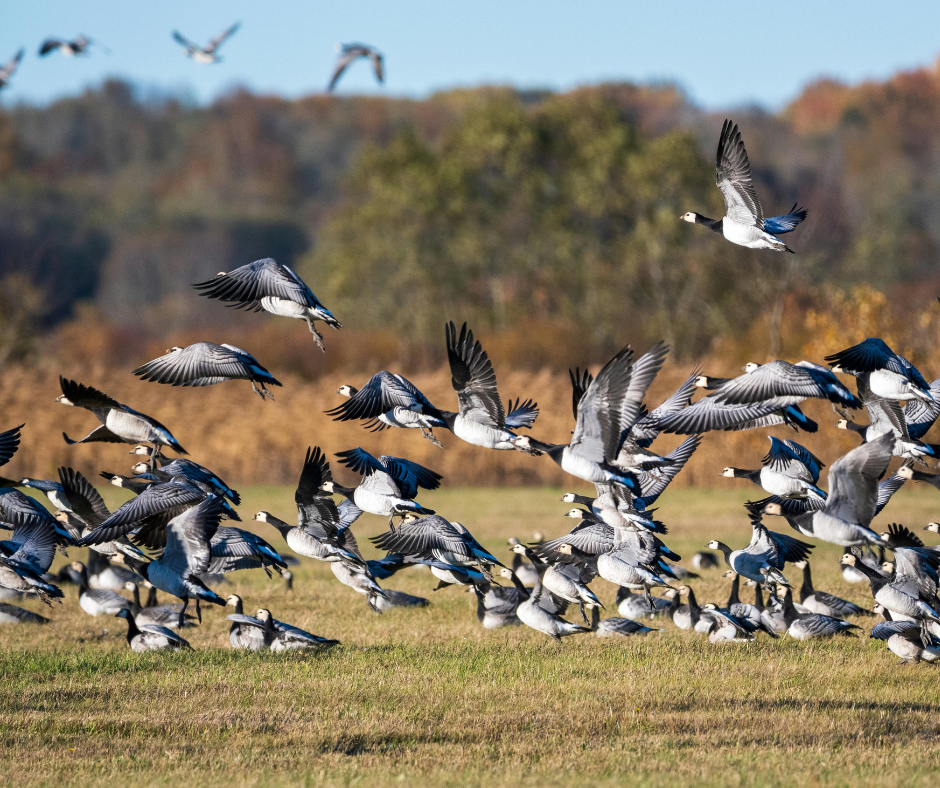
Witnessing the Great Migration is a privilege. It's not about collecting photos or checking off a bucket list. It’s about entering a living, breathing ecosystem with reverence.
Travel as a guest, not a spectator
You’re stepping into ancient land,walk gently. Ask questions, not just for Instagram captions, but for understanding. Greet people in their language. Listen to the stories behind the landscapes.
Choose meaningful, regenerative experiences
At Mang’ola Life, we believe safaris should be more than just scenic drives. That’s why we co-create journeys that uplift local voices, prioritize low-impact travel, and invite you to engage, not just observe.
From partnering with Indigenous guides to choosing conservation-centered routes, every step of our safari experiences is shaped by the values of respect, reciprocity, and regeneration.
If you’re ready to witness the migration with intention, to feel the earth, not just tour it,then this journey is for you.
Ready to witness the wild, without losing your soul?
At Mang’ola Life, We do connection.
We do presence.
We do safaris that help you remember your place in the natural world.So if you’re craving more than just sightings…
If you want to move with purpose, learn from ancient wisdom, and stand in awe of nature’s greatest journey...
Then don’t just book a safari.
Accept the invitation.
Explore ourconscious safari experiencesand begin your walk today.

Welcome to Mang'ola life we are a sustainable safari company located in the heart of Tanzania, Africa. Plan your next adventure with us.